The six zones
| Zone | Standard time | Daylight time |
|---|---|---|
| Eastern | UTC−5 | UTC−4 |
| Central | UTC−6 | UTC−5 |
| Mountain | UTC−7 | UTC−6 |
| Pacific | UTC−8 | UTC−7 |
| Alaska | UTC−9 | UTC−8 |
| Hawaii-Aleutian | UTC−10 | UTC−9 (Aleutian Islands only) |
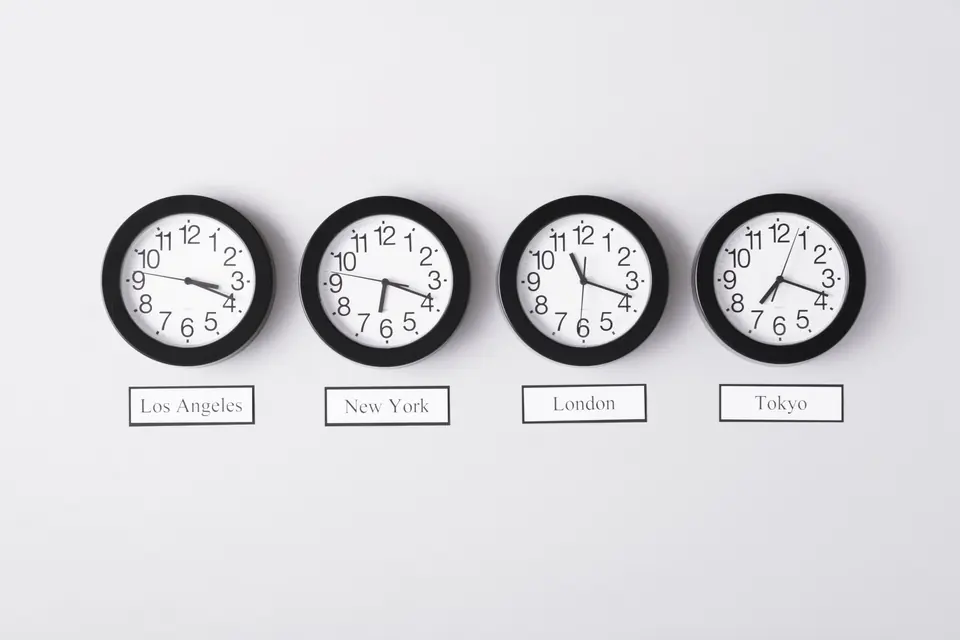
Each zone is one hour behind the one to its east. When it is 3 pm in New York it is 2 pm in Chicago, 1 pm in Denver and noon in Los Angeles.
Daylight saving time
Most of the country moves its clocks forward one hour on the second Sunday in March and back on the first Sunday in November, at 2 am local time. In 2026 that was 8 March and 1 November. Under the current law the next change is 14 March 2027.
Hawaii and most of Arizona stay on standard time all year. The Navajo Nation, which extends into Arizona, does change its clocks. The US territories do not.
That is why the gap to some places changes during the year. New York is five hours ahead of Honolulu in winter and six in summer.
Will the clock changes end?
Possibly. In July 2026 the House of Representatives passed the Sunshine Protection Act, which would keep daylight time all year and let states opt out. As of November 2026 the Senate had not passed it, so the twice-yearly change is still the law.
States with two time zones
Zone lines do not always follow state lines. Florida, Indiana, Kentucky, Michigan and Tennessee are split between Eastern and Central. Kansas, Nebraska, North Dakota, South Dakota and Texas are split between Central and Mountain. Idaho and Oregon are split between Mountain and Pacific.
Converting without mistakes
Work from the date as well as the time, because the offset depends on whether daylight time is in force on that day. Our time zone converter uses your browser's time zone database, so it applies the right offset for any date you pick.